As of July 1st, there will be a 3% surcharge fee on all cards. ACH online bank payments does not have a fee.

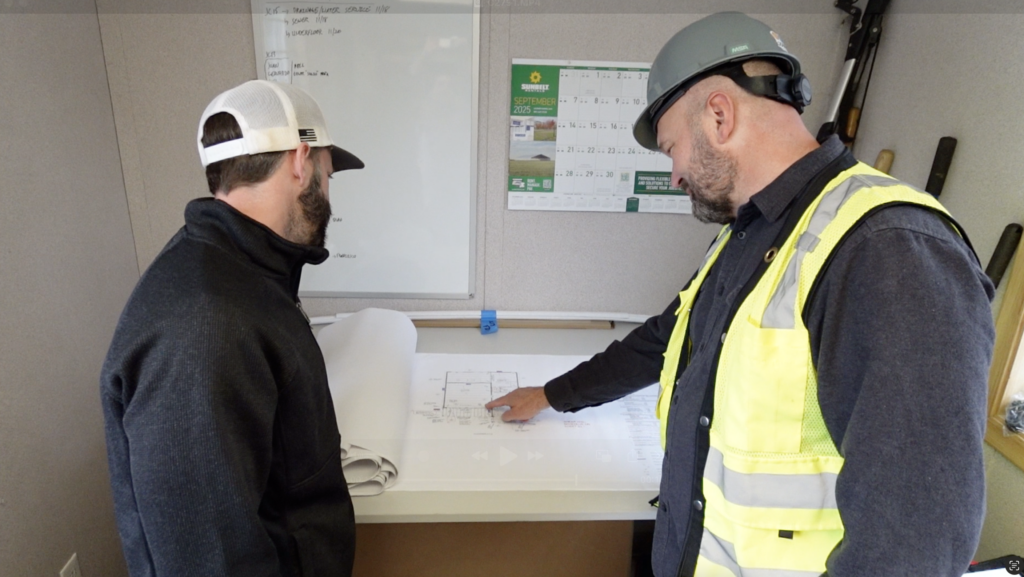
The Building Inspector curriculum builds practical inspection skills used by local building departments throughout Washington State.
Students develop competencies in:
BUILDING INSPECTOR 201
Minimum: 100 hours per quarter
Instructor: Johnathan Goldsmith, CBO, ACO
BI 201: Code Administration In Washington: Fall Quarter
This course is designed to introduce the essential elements of inspection in ensuring safety in the built environment, often taking place periodically throughout the life of a building. Inspections may be provided by local governments, state agencies, industry organizations, or private entities.
Prerequisites: COAP Year 1 or Dual Enrollment
Required Material*
It is the student’s responsibility to have the following book(s) prior to the first day of class:
Inspector Skills – $30.00
International Property Maintenance Code (Soft Cover) – $63.00
BUILDING INSPECTOR 202
Minimum: 100 hours per quarter
Instructor: Johnathan Goldsmith, CBO, ACO
BI 202: Public Policy And Regulations: Winter Quarter
This course is designed to help further develop inspector “soft skills” while remaining within the lines of public policy and regulation. These “soft skills” are important for those employed in public service such as Permit Technicians, Building Inspectors, and Plans Examiners. Conduct research, analyze data and clearly report results related to code requirements, materials and methods of construction.
Prerequisites: BI 201
Required Material*
It is the student’s responsibility to have the following book(s) prior to the first day of class:
Inspector Skills – $30.00
Legal Aspects of Code Administration – $54.00
BUILDING INSPECTOR 203
Minimum: 100 hours per quarter
Instructor: Andrew Lunde
BI 203: Building Inspector: Spring Quarter
This course is designed to introduce basic knowledge and understanding of the International Building Codes administered at the local level by Permit Technicians, Building Inspectors, and Plans Examiners. Some topics covered will be on doors, windows, insulation, and energy credits in the following areas: occupancies, allowable area and stories, types of construction, fire resistance, fire protection systems, means of egress, and accessibility.
Prerequisites: BI 201 and BI 202
Required Material*
It is the student’s responsibility to have the following book(s) prior to the first day of class:
International Building Code (Soft Cover) – $209.00
Building Code Essentials – $55.00
Building Code Illustrated: A Guide to Understanding the IBC – $73.00
Residential Building Inspection: A Step-by-Step Guide – $40.00
*Required material, editions, availability, and cost are subject to change without notice. We recommend not purchasing items for future quarters.
Graduates of the Building Inspector track are prepared for entry-level and mid-level inspection roles within city and county building departments.
Inspects residential and commercial construction projects at various stages to verify compliance with building codes, approved plans, and safety standards.
Evaluates single-family homes and small residential projects to ensure construction meets structural, safety, and zoning requirements.
Reviews commercial construction sites to confirm compliance with complex building codes, fire safety requirements, and accessibility standards.
Inspects heating, ventilation, and air conditioning systems to ensure proper installation and compliance with mechanical codes and safety regulations.
Demand for trained building safety professionals continues to grow across Washington State.
Enrollment for Fall 2026 begins May 4, 2026. Classes begin September 8, 2026, and space is limited.

Washington State offers competitive compensation for qualified building inspectors working within local jurisdictions.
Estimated Annual Range
Tuition and fees are paid quarterly to ensure students receive full access to program instruction and materials.
Students are responsible for obtaining standard reference codes prior to the first day of class.
The Building Inspector program requires successful completion of three quarters of coursework totaling approximately 300 hours of instruction.



Johnathan is a Deputy Building Official. Utilizing exceptional customer service, conflict-resolution, and problem-solving skills. He strives to provide quality, life-safety-compliant projects (single/multi-family residential and commercial). Johnathan has a passion for the building industry, including educating tradesmen to promote mutual trust and respect in the community.
Currently Teaching: BI 201 and BI 202
Andrew is an Engineering Services Manager. He manages the plan review process of building, mechanical, demolition, and grading permits from preapplication to permit issuance. Andrew manages staff of 53 employees consisting of structural engineers, permit process leaders, & building plans examiners.
Currently Teaching: BI 203
Certificate of Completion
Upon successful completion of each year the student will be awarded a WABO Code Official Accreditation Program Certificate of Completion.
Certificate of Accreditation
Upon successful completion of each year if the student has completed the required International Code Council (ICC) certificates the student will be awarded a WABO Code Official Accreditation Program Certificate of Accreditation.
Summary
All students who complete their program year will receive a Certificate of Complete. We highly encourage students to obtain their International Code Council (ICC) certifications, but is not required to complete any year of the COAP program.
No. The program is designed to train both current staff and individuals looking to enter the profession for the first time. Students typically complete COAP Year 1 – Permit Technician prior to enrolling in Year 2 – Building Inspector program. A student may also Dual Enroll which would allow the student to complete Year 1 and Year 2 concurrently.
Yes. WABO offers scholarships that may reimburse up to 50% of tuition for students not receiving employer support, and up to one-third for those receiving partial funding.
Students need a computer and reliable internet access. The ability to participate in virtual classes, complete assignments, and access the online learning system.
Choose a payment method to continue to checkout.